Supply Chain
Reduce Cost by Partnering with a Single Source Manufacturer
Simplify Assembly Lines and Reduce Cost
OEM manufacturers rely on thousands of individual components to keep their production lines operating. Managing those components requires purchasing, quality, logistics and engineering resources, especially when several suppliers are involved in producing one final assembly.
This raises an important question when sourcing fabricated products.
If your production line needs a complete seat frame, instrument panel bar or exhaust assembly, is there an advantage to purchasing the components separately from different suppliers? Or is it more efficient to have one single source manufacturer responsible for delivering the complete assembly?
Purchasing the complete subassembly can simplify the supply chain, while improving quality control and reducing manufacturing risk.
One Supplier Responsible for the Complete Process
Consider a welded seat frame.
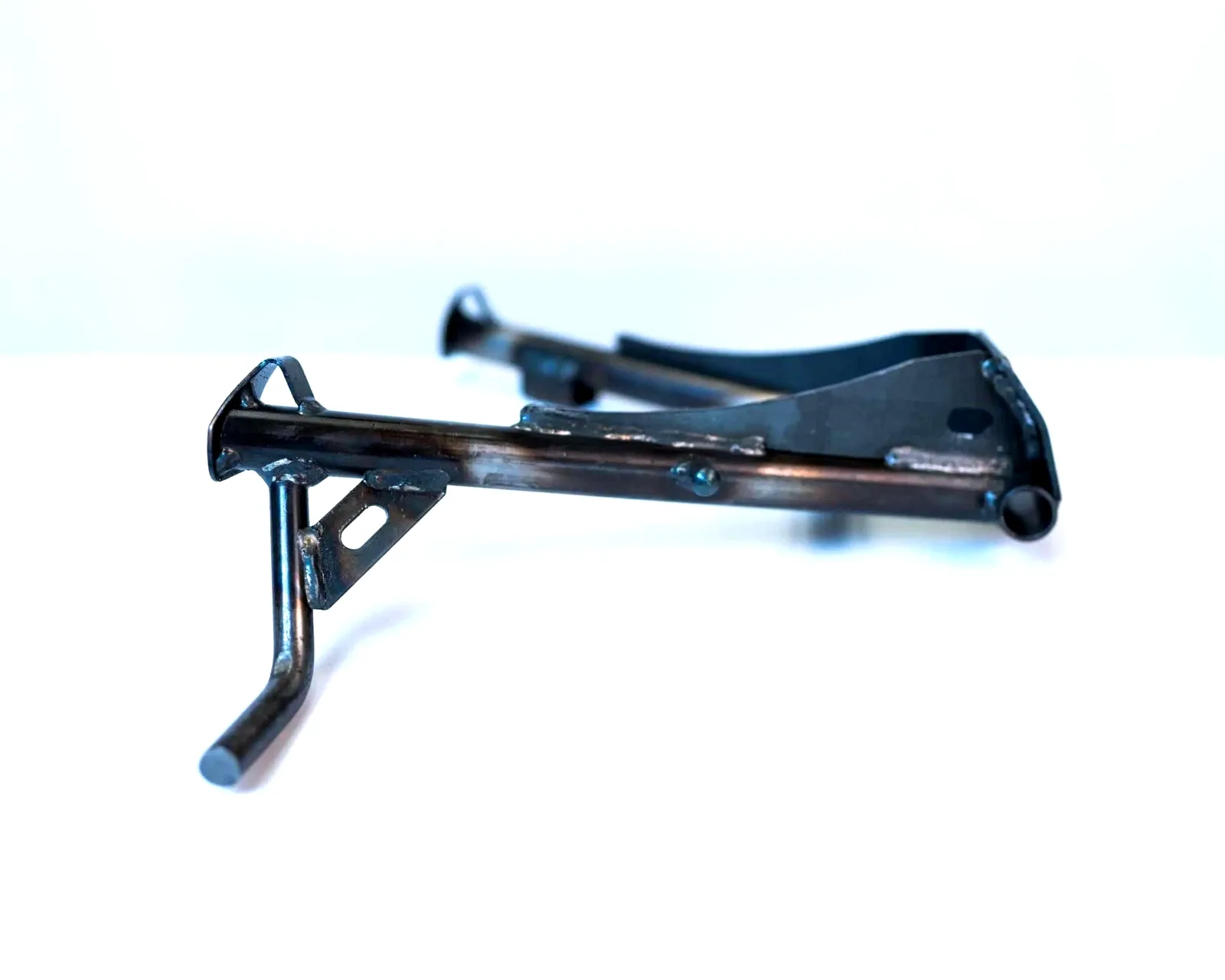
The assembly may include stamped parts, formed tubes, brackets and other components. Those parts need to be manufactured, positioned in fixtures, welded, inspected and finally delivered to the customer’s production line.
One approach is to divide those operations among several suppliers. Another is to give a single contract manufacturer the responsibility for the complete assembly.
In this case, the contract manufacturer sources the raw material, forms individual components and then welds the assembly. It also verifies the dimensions with final assembly gauges and ships the finished assembly to the OEM. There are fewer suppliers to manage, reducing time and cost.
The OEM receives one sub-assembly or assembly line ready product, instead of receiving several components under different part numbers. Under this model, there is one supplier responsible for the result.
Reducing the Complexity of Managing Multiple Suppliers
Every additional supplier requires resources. Sourcing teams must analyze supplier qualifications and conduct audits to bring each supplier onboard. Once onboard, each supplier needs to be issued purchase orders, included on production schedules and subject to quality inspections. A delay from a single supplier can affect the entire assembly line.
Reducing the number of tasks in the supply chain allows sourcing, quality and assembly teams to invest more time managing the performance of the finished product.
Supplier consolidation should not be evaluated only as a purchasing strategy. It is also a manufacturing efficiency strategy.
Who Is Responsible When the Assembly Does Not Fit?
Quality becomes particularly important when several manufactured components must fit together. Every manufacturing process has variation. Stamping, bending, tube forming and welding all have tolerances that need to be controlled.
The accumulated variation of tolerances could create problems in the final assembly. Tolerance stack-up is common, so strict metrology protocols need to be enforced by the OEM and its suppliers. Variations are minimal and difficult to control.
When the components come from different suppliers, determining the source of a tolerance variation can take time. Controversy between suppliers is inevitable and supplier quality departments invest considerable time correcting potential deviations.
Finding the root cause of a metrology problem takes less time when one single source contract manufacturer controls the complete sub-assembly process. The single source supplier is responsible for the quality of the sub-assembly.
Fixtures and gauges are designed to verify the dimensions that are critical to the OEM’s final product. Forming processes can be evaluated together with welding distortion. Adjustments can be made before the assembly reaches the OEM production line.
The objective is to consistently manufacture an assembly that fits and performs as specified.
Fewer Deliveries and Less Inventory to Manage
Supplier consolidation can also simplify material flow.
The risk of not receiving the correct quantity on time increases when components are purchased separately. Inventory needs to be maintained for every component, and quantities must be monitored individually. This increases the probability for assembly line stoppages.
A seat requires several components to be installed, but it only takes one missing bracket to prevent the seat from being assembled. The value of that bracket may be insignificant within the cost structure of the finished product, but its absence can considerably affect the OEM’s total production cost.
Inventory, freight, inspections, material handling, supplier management and production stoppages all have a cost. In most cases, those costs can be considerably greater than a small difference in the purchase price of an assembly line ready component.
With a complete subassembly, the single source supplier manages individual components, and the OEM focuses on its assembly line.
Quality and Cost Have to Be Evaluated Together
Cost reduction is a key component of lean manufacturing. However, the lowest component price does not necessarily result in the lowest total production cost. Poor quality, excessive inventory and line stoppages can quickly eliminate savings obtained through negotiating lower component prices.
Quality systems, process controls, preventive maintenance, production planning and continuous improvement are critical for OEMs. Supply chain inefficiencies can eventually become higher production costs.
OEM sourcing teams must include the resources required to manage multiple suppliers in their purchasing decision making. There is nothing costlier to OEMs than quality problems at the end customer level.
Manufacturing the Complete Subassembly at Servintec
At Servintec, we have developed our manufacturing capabilities around single source manufacturing. For metal fabricated assemblies and sub-assemblies, we can manage the process from raw material through forming, bending, welding, assembly, gauging and final delivery.
This approach can be applied to products such as seat frames, steering lever handles, instrument panel bars, exhaust assemblies and other welded or fabricated structures.
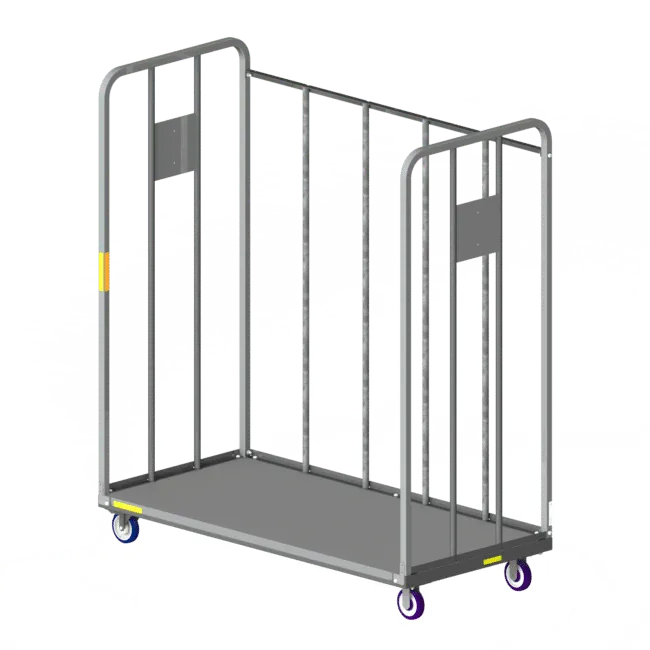
Servintec’s customers receive a finished assembly under one part number. Our assemblies and sub-assemblies are suitable for trucks, UTVs, ATVs, motorcycles, tractors, zero turn mowers and other off-road vehicles.
Send us a print or a sample and our engineering team will scope the assembly, the tooling and the gauging required to deliver it as one part number.