
From CAD to Reality: How 3D Modeling Accelerates Product Development
Every great product starts with a spark, an idea that has the potential to change a process, improve performance, or solve a pressing problem. But how do you turn that spark into something real, fast, and cost-effectively? That’s where 3D modeling steps in.
3D modeling is no longer just a design tool. It’s the engine that drives faster, smarter, and more cost-effective product development. Whether you’re designing a new aerospace part or building an industrial machine, 3D modeling helps you move from idea to reality without wasting time or money.
By starting with a digital model, engineers can simulate, refine, and even manufacture parts, all before the first prototype is made. It’s a complete shift in how we think about bringing products to life.
Speeding Up the Product Development Timeline
In traditional workflows, each phase such as concept, design, prototyping, testing, and manufacturing happened one at a time. But with 3D modeling, many of these stages overlap.
Instead of waiting for a prototype to test dimensions or performance, you can run simulations inside the CAD environment. This allows your team to identify design flaws, mechanical interference, or stress failures before a physical model exists.
Not only does this reduce the number of physical prototypes needed, it also shrinks the feedback loop. You can make quick revisions and test again in minutes. That agility shortens your path to market.
CAD Design as the Foundation
Every great product begins with a solid CAD design. These digital blueprints are more than visual aids; they define dimensions, tolerances, materials, and how each part interacts within an assembly.
Modern CAD tools integrate seamlessly with 3D modeling platforms. This means your engineering data stays accurate and up to date from the first sketch to final production. CAD design also opens the door to things like version control and cloud collaboration. Multiple engineers can work on the same file, see each other’s changes in real time, and avoid costly miscommunication.
We use this approach to support clients across the aerospace, automotive, and heavy machinery sectors, where accuracy and speed are everything.
Smarter and Leaner Prototyping
Prototyping used to be one of the most expensive and time-consuming phases of development. But with 3D modeling, you’re no longer starting from scratch.
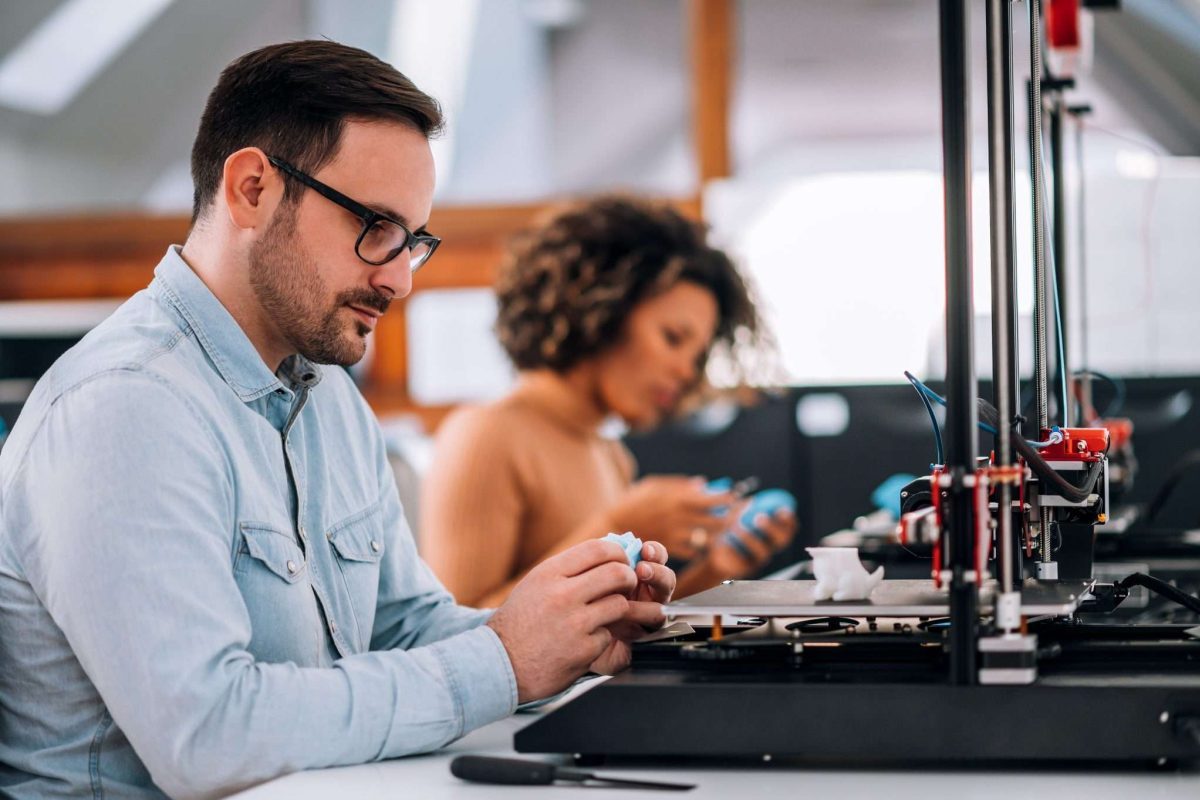
You can create digital mock-ups and use them to test functionality, fit, and strength. And when you’re ready to test a physical version, it’s just a short jump to rapid prototyping tools like 3D printing or CNC machining.
These methods take your CAD design and convert it directly into a working prototype, often in less than a day. It’s this blend of digital and physical that accelerates product development like never before. By working with digital prototypes first, teams can identify issues early, make adjustments, and avoid investing in flawed designs.
Design for Manufacturing (DFM) Made Easy
One of the best things about 3D modeling is how easily it integrates with Design for Manufacturing (DFM) principles. Designing something that looks good on screen is one thing; designing something that can be made efficiently is another.
DFM ensures your design fits your production capabilities from the start. Will it need special tooling? Can it be molded, stamped, or machined easily? These questions are answered early with the help of 3D modeling.
Engineers can simulate different manufacturing methods, compare material options, and make smart decisions while still in the digital phase. That means fewer redesigns, fewer surprises, and faster launch times. This is one of the areas where we at Servintec USA really make an impact, helping companies design parts that are both high quality and production-ready from day one.
Digital Twin: More Than a Buzzword
A digital twin is a detailed digital representation of a physical product. While it’s often associated with real-time performance monitoring, its true value in early-stage development lies in visualization, simulation, and iterative refinement.
By creating a digital twin during the design phase, engineering teams can analyze geometry, evaluate tolerances, and simulate how a product will function under different conditions—all before physical production begins.
This modeling approach is especially useful for high-precision parts in industries like aerospace and automotive, where performance expectations are non-negotiable. A digital twin also helps teams communicate clearly, maintain consistency, and avoid costly mistakes during transitions from design to manufacturing.
To explore how digital twins connect 3D modeling with smarter design and production workflows, this Autodesk resource provides practical insights and examples.
Collaboration Gets a Whole Lot Easier
Before 3D modeling became standard, product development often felt siloed. Design, engineering, manufacturing, and marketing all worked in separate phases and systems.
Now, everyone works off the same digital model. Engineers update the design, and production teams can instantly review it for feasibility. Marketing teams can use rendered visuals for promotion before the product is even made.
This kind of synchronized collaboration reduces miscommunication, speeds up decision-making, and keeps the entire team aligned. Our team has helped manufacturers reduce development cycles by up to 40% just by adopting a more collaborative, model-based process.
The Competitive Edge of 3D Modeling
The companies winning today aren’t just building better products; they’re doing it faster and smarter. 3D modeling gives them the edge.
By catching errors early, minimizing rework, and streamlining communication, teams can respond quickly to customer demands and market trends. That flexibility often makes the difference between leading the market and lagging behind.
At Servintec USA, we’ve helped companies in industrial, aerospace, and commercial markets modernize their workflows using 3D modeling as the backbone. And we’ve seen firsthand how it drives results.
From Idea to Reality, Faster
The transition from CAD to reality has never been smoother. 3D modeling not only shortens timelines—it improves quality, reduces waste, and cuts costs.
Each step of the development process becomes clearer and more efficient when you start with a robust digital foundation. Whether you’re a startup building your first prototype or a manufacturer scaling production, 3D modeling gives you control and clarity.
We’ve seen the difference it makes when teams can move quickly from concept to production, with fewer revisions, fewer delays, and better outcomes.
If you’re working on a new project or looking to improve an existing one, now is a great time to explore what’s possible. We’re here to support you with practical insight and reliable engineering expertise, every step of the way.